
UK Gambling Regulations and Ice Hockey Betting: Affordability Checks, Levy and Stake Limits Explained
 Available in US
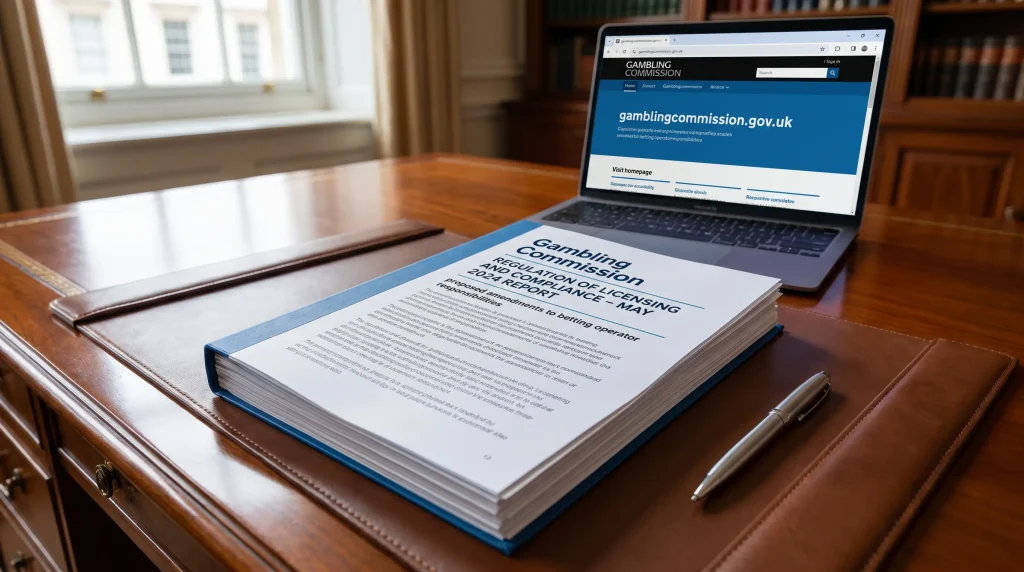
In nine years of betting on ice hockey in the UK, I have never been more aware of the regulatory environment than I am now. The 2025 reform package that the UK Gambling Commission and HMRC have delivered is the most substantive change to how UK sports betting operates since the 2005 Gambling Act, and it affects every bettor who funds an online account in Britain — regardless of whether they are staking on the Stanley Cup Final or a Sheffield Steelers midweek fixture.
Three changes matter most for practical betting purposes: the financial vulnerability check on deposits above £150 in a 30-day period, the online slot stake limits that went live in April 2025, and the statutory gambling levy that replaced the previous voluntary operator contribution framework. A fourth change — the proliferation of enforcement action against unlicensed operators — affects the landscape of which bookmakers are safe to use. This guide explains all four clearly, without the legal jargon, and with specific attention to how each one affects the experience of betting on NHL or EIHL as a UK resident.
Affordability Checks: What They Are and When They Are Triggered
From 28 February 2025, UK-licensed online bookmakers are required to conduct a financial vulnerability check when a customer’s net deposits exceed £150 within a 30-day rolling period. This is not an income assessment or a creditworthiness check in the traditional sense. It is a check against publicly available data sources — credit reference agencies, insolvency registers, and similar — to identify whether a customer shows signs of financial distress that might indicate their gambling is causing harm.
The threshold is triggered by net deposits, not gross stakes. If you deposit £200 and withdraw £100 in a calendar month, your net deposit position is £100 — below the threshold. If you deposit £200 and do not withdraw anything, the check is triggered at the point where cumulative deposits cross £150. The check happens automatically on the operator’s side; you do not initiate it or see it happening in most cases.
What happens when the check is triggered depends on its outcome. If no flags are raised against the data sources, the account continues normally with no interruption to betting activity. If the data sources indicate potential financial vulnerability — which might include a recent County Court Judgement, a credit score deterioration, or appearance on an insolvency register — the operator is required to take further action. That further action can range from a soft contact to the customer, to requesting supporting financial information, to restricting deposits until the situation is clarified.
For the vast majority of recreational bettors on hockey — people depositing normal amounts to fund a regular betting hobby — the affordability check is invisible in practice. It runs, finds nothing of concern, and the account operates normally. The scenarios where it becomes visible are when financial circumstances have genuinely changed in a way that is reflected in public records, or when deposit patterns trigger the check and the operator’s data provider returns an ambiguous or flagged result.

One thing worth understanding clearly: the affordability check is specifically a vulnerability check, not an income verification. An operator cannot require you to prove that you earn enough to bet at a particular level. They can flag and investigate vulnerability indicators, but the framework is designed around harm prevention rather than income gatekeeping. Clifford Chance’s analysis of the 2025 reforms described affordability checks, stake limits, and the levy together as representing “some of the most tangible outcomes to date” of the UK’s gambling reform programme, framing them explicitly as consumer protection measures rather than betting restrictions.
One practical implication worth flagging for higher-volume hockey bettors: if you regularly fund multiple accounts across several bookmakers — which is common among serious sports bettors who shop for best odds — the £150 threshold applies per operator, not across all operators combined. A £50 deposit at one bookmaker and a £120 deposit at another in the same month does not trigger the check at either, because neither individual operator’s deposit threshold has been crossed. This is not a loophole; it reflects the regulatory design, which ties the check to the individual operator’s customer relationship rather than to a cross-industry view of a bettor’s total activity.
Online Stake Limits from April 2025: What Changed and for Whom
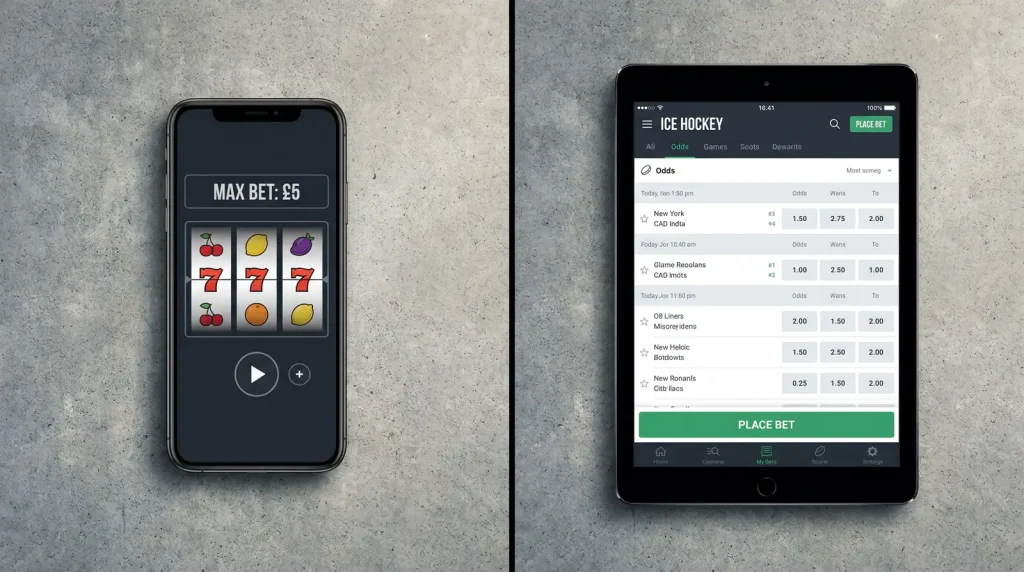
The headline regulation most bettors have heard about is the online stake limit, and it has generated significant confusion about whether it affects sports betting. It does not. The limit applies exclusively to online slot games — specifically to the spin stake on any slot machine game licensed for online play in the UK. It does not apply to sports betting, live casino, poker, or any other betting product.
From 9 April 2025, the maximum stake per spin on online slots is £5 for customers aged 25 and over, and £2 for customers aged 18 to 24. The lower limit for younger players reflects the Gambling Commission’s concern about disproportionate harm risk in that demographic. Both limits apply per spin, not per session or per day — a player can spin as many times as they wish, but each individual spin cannot exceed the limit.
For ice hockey bettors, the practical implications are minimal. You can stake whatever amount you choose on an NHL moneyline, EIHL match winner, puck line, or totals bet. The regulatory slot limit does not create any ceiling on individual sports bet sizes at the level of UK law. Operators may apply their own stake limits to specific accounts or markets as a commercial risk management decision, but that is a separate matter from the regulatory framework.
Why mention it in a hockey betting guide at all? Because the confusion between slot stake limits and sports betting stake limits is real and widespread. I have seen it asked repeatedly on hockey betting forums: “Can I still bet £50 on the Steelers game or have the new rules changed that?” The answer is yes, you can. The regulatory change that directly affects sports bettors is the affordability check — which I described above — not the slot stake limit.
The Statutory Gambling Levy: A New Cost on Every UK Bookmaker
The gambling levy is the change that most bettors have not heard of, despite it being one of the most structurally significant reforms in the 2025 package. From 6 April 2025, all UK-licensed online operators pay a statutory levy set at 1.1 percent of their gross gambling yield. This replaces the previous voluntary contribution system, where operators made discretionary donations to research, education, and treatment programmes at amounts they chose.
The practical effect on bettors is indirect. The levy does not change the odds you are offered or the markets available to you. It is a cost that operators absorb — or pass on in their margins — at the business level. The shift from voluntary to statutory has two implications worth understanding. First, every licensed operator is now contributing to gambling harm research and treatment at the same rate, removing the previous system where some operators contributed generously and others contributed minimally. Second, the revenue from the levy funds the National Gambling Support Network and associated treatment services more reliably than voluntary contributions did.
For hockey bettors specifically, the levy has no direct effect on the experience of placing a bet. Odds on NHL and EIHL markets are not changed by the levy. What changes is the regulatory confidence that the operator you are using is compliant with the full UK framework — a licensed operator pays the levy; an unlicensed one does not. This connects to the licence verification section below, because an operator’s UKGC licence status is now linked to their levy compliance as well as their consumer protection obligations.
The levy revenue is specifically earmarked for gambling harm research, education, and treatment under the National Gambling Support Network. For anyone who wants to understand the full picture of responsible gambling infrastructure that underpins the UK market, that funding is what pays for the treatment services, the research into harm indicators, and the education campaigns. Whether you engage with those services or not, their existence is part of what distinguishes the UK’s regulated environment from the unlicensed alternatives that exist in the grey and black market.
How to Verify a Bookmaker’s UKGC Licence Before Depositing
Every legitimately operating online bookmaker in the UK must hold a Gambling Commission licence. This is not optional, and it is not a formality — the licence is the mechanism through which the UKGC enforces all of the consumer protection requirements I have described above, including affordability checks, levy payment, and responsible gambling tools.
Verifying a licence takes under a minute. Go to the Gambling Commission’s public register at gamblingcommission.gov.uk and search for the operator by name. The register shows whether the licence is active, what type of activity it covers (remote betting, casino, etc.), and any licence conditions attached. If you cannot find the operator in the register, do not deposit. An operator who claims to be UK-licensed but does not appear in the register is either unlicensed or operating on an expired licence — neither is acceptable.

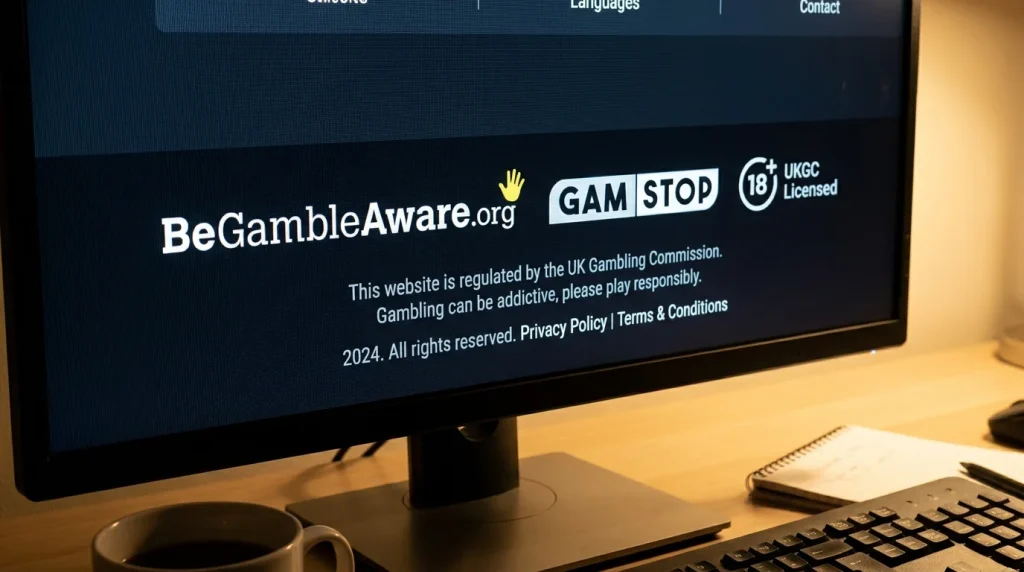
A secondary check worth doing for any new operator: look for the GamStop logo on the website and the BeGambleAware footer link. These are required for UKGC-licensed operators and their presence is a quick visual confirmation that the site is operating within the UK framework. The absence of either is a red flag that should prompt you to check the licence register before proceeding.
Most bettors using well-known UK bookmaker brands will never need to do this verification — the brands are self-evidently licensed and have been for many years. The check becomes important when you encounter a newer operator offering particularly competitive odds on hockey markets, or any site you find through an ad or an affiliate recommendation that you have not previously used.
GamStop Self-Exclusion: The Numbers and What They Mean
GamStop is the UK’s national online self-exclusion scheme, which blocks a registered customer from accessing all UKGC-licensed gambling websites for their chosen exclusion period. As of the end of 2025, 562,000 people were registered with GamStop — with 58,675 new registrations in the second half of 2025 alone, averaging 319 new sign-ups per day. The growth in registrations among 16 to 24-year-olds increased by 40 percent year-on-year in the second half of 2025, which reflects both broader youth engagement with online betting and the success of harm awareness campaigns in that demographic.
GamStop applies universally across all UKGC-licensed operators. If you register, no licensed UK bookmaker — including those with the strongest hockey coverage — will allow you to access your account during the exclusion period. The scheme offers exclusion periods of six months, one year, and five years, with an auto-renewal option that a growing number of registrants are choosing to extend their protection automatically.
For a full explanation of how GamStop interacts with hockey betting specifically — including what happens to any open bets at the point of registration and how to access support after self-exclusion — the dedicated guide at GamStop and ice hockey betting covers the process in detail.
Practical Safer Betting Tools Beyond Self-Exclusion
Self-exclusion is the right tool when gambling has become a problem. The tools I am describing here are for bettors who want to stay in control proactively — before a problem develops rather than after.
Deposit limits are available at every UKGC-licensed bookmaker and are one of the most effective tools for keeping sports betting within a predetermined budget. You set a daily, weekly, or monthly deposit maximum; the operator enforces it; requests to increase the limit are subject to a mandatory cooling-off period before they take effect. I use a monthly deposit limit on every account I hold as a baseline practice, independent of any concern about problem gambling — it is simply good financial hygiene for any recurring recreational spend.
Session limits allow you to set a maximum duration for each betting session. These are particularly relevant for NHL live betting, where the late-night context and continuous market activity can make it easy to lose track of time. Setting a two-hour session limit at the start of a late-night NHL session is a straightforward guard against that.
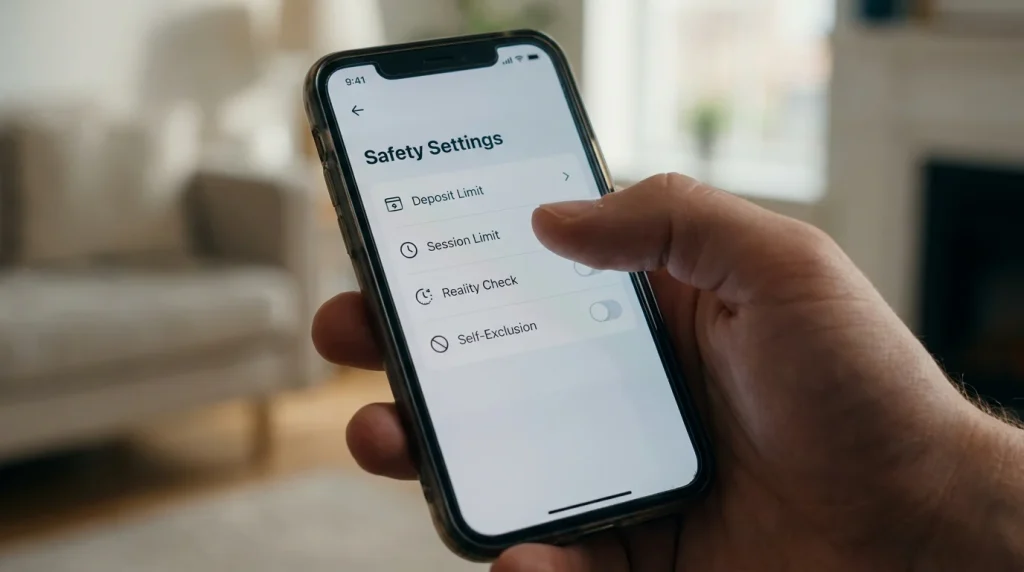
Reality checks — pop-up prompts that tell you how long you have been betting and how much you have staked — are available at most operators and can be set to trigger at intervals you choose. They are less robust than deposit limits or session limits, but they serve a useful cognitive function of interrupting habitual behaviour.
Cooling-off periods allow you to take a break from an account for a defined period without permanently closing it. This is useful if you notice your betting patterns shifting in a direction you are not comfortable with — more frequent sessions, increasing stakes beyond your normal range, chasing losses after a bad run. Acting on that recognition early, with a cooling-off period, is far easier than waiting until the pattern has become entrenched.
One pattern specific to NHL betting that is worth monitoring in yourself: the late-night session that runs longer than planned. The combination of quiet hours, continuous live markets, and the cumulative effect of fatigue on decision-making creates a context where boundaries that would hold at 9pm can erode at 2am. Experienced late-night hockey bettors I know — people who do this profitably and sustainably — almost universally use some combination of pre-committed session limits and a strict exit rule around a specific time or a specific loss figure. Building those guardrails when you are fresh and rational, rather than relying on willpower at 3am, is the discipline that makes late-night hockey betting a hobby rather than a problem.
If at any point gambling feels less like entertainment and more like something you are doing to manage stress, recover from losses, or meet an emotional need, the BeGambleAware website and the National Gambling Helpline (0808 8020 133) are free, confidential services. The UK’s prevalence of problem gambling is measured at 0.2 percent of the population, with a further 1.2 percent in the moderate-risk category — small percentages that still represent hundreds of thousands of individuals. Early intervention helps. Contacting support is not a last resort; it is often the first step in a straightforward and successful course correction.
Unlicensed Bookmakers: Why the Regulatory Crackdown Matters to You
The Gambling Commission has intensified its enforcement against unlicensed operators, and the scale of that enforcement is worth knowing. In a January 2025 speech, the Commission’s Chief Executive disclosed that more than 102,000 URLs of illegal betting websites had been referred to Google for removal, with 64,000 removed and 264 sites taken down entirely. This is not a minor issue at the margins of the market — it represents a large-scale effort to protect UK consumers from operators who are not subject to the protections described throughout this guide.
The reason to care about this as a hockey bettor specifically is that unlicensed operators occasionally appear in search results and affiliate listings for niche sports markets, sometimes offering odds that are more competitive than their licensed competitors. The explanation for those better odds is straightforward: they are not paying the gambling levy, they are not funding GamStop, they are not conducting affordability checks, and they have no regulatory obligation to return your funds if they choose to withhold them. The apparent value of a better price disappears entirely if the operator does not pay out.
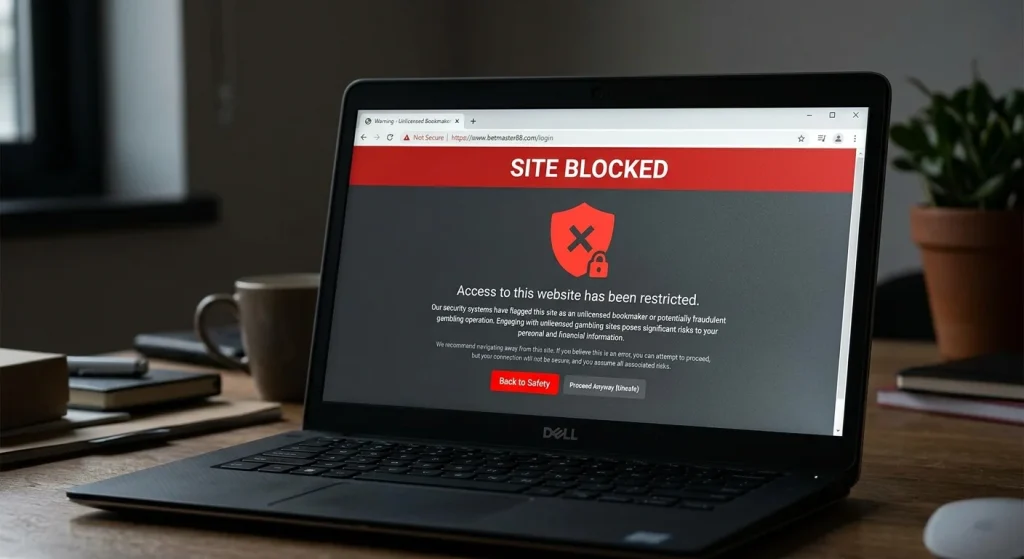
The practical rule is simple: if an operator does not appear in the UKGC’s public register, do not deposit, regardless of how competitive their hockey odds look. The £153 million year-on-year increase in UK betting and gaming tax receipts in the first five months of the 2025/26 financial year — provisional HMRC figures put the April to August 2025 total at £1.786 billion — reflects a growing, taxed, regulated industry. That regulated industry is where your money is protected. The unlicensed fringe of that market is where it is not.
What triggers a financial vulnerability check at a UK bookmaker?
A financial vulnerability check is triggered when your net deposits to an operator exceed £150 within a rolling 30-day period, under rules that came into effect on 28 February 2025. The check runs automatically against publicly available data sources including credit reference files and insolvency registers. In the majority of cases it completes without any visible interruption to your account. It is a vulnerability indicator check, not an income assessment.
How does GamStop work if I want to stop betting on NHL games?
Registering with GamStop applies a self-exclusion across all UKGC-licensed online gambling operators simultaneously. Every UK-licensed bookmaker carrying NHL and EIHL markets is covered by the scheme. Once registered, your accounts at all licensed operators are blocked for the duration you choose — six months, one year, or five years. The scheme also offers an auto-renewal option to extend the exclusion automatically at the end of your chosen period.
Does the 2025 gambling levy affect the odds or margins offered to bettors?
The statutory levy of 1.1 percent of gross gambling yield is a cost absorbed at the operator level and does not directly change the odds presented to customers. Theoretically, an operator could marginally tighten their pricing to offset the levy cost, but in a competitive UK market with multiple licensed operators competing on odds quality, any such adjustment would be small and commercially constrained.
What should I do if a bookmaker requests documents as part of affordability checks?
Providing the requested documents promptly is the most straightforward approach. Operators are required by law to conduct these checks and cannot be bypassed. The documents typically requested are standard financial records — recent bank statements or payslips. They are used only for the vulnerability assessment and handled under data protection obligations. If you disagree with the outcome of a check or feel it has been handled incorrectly, the Gambling Commission and the Independent Betting Adjudication Service both provide escalation routes.
Articles
Created by the "Best Ice Hockey Betting Sites" editorial team.
