
Three-Way Hockey Betting Markets: What Is the 3-Way Result and When to Use It
 Available in US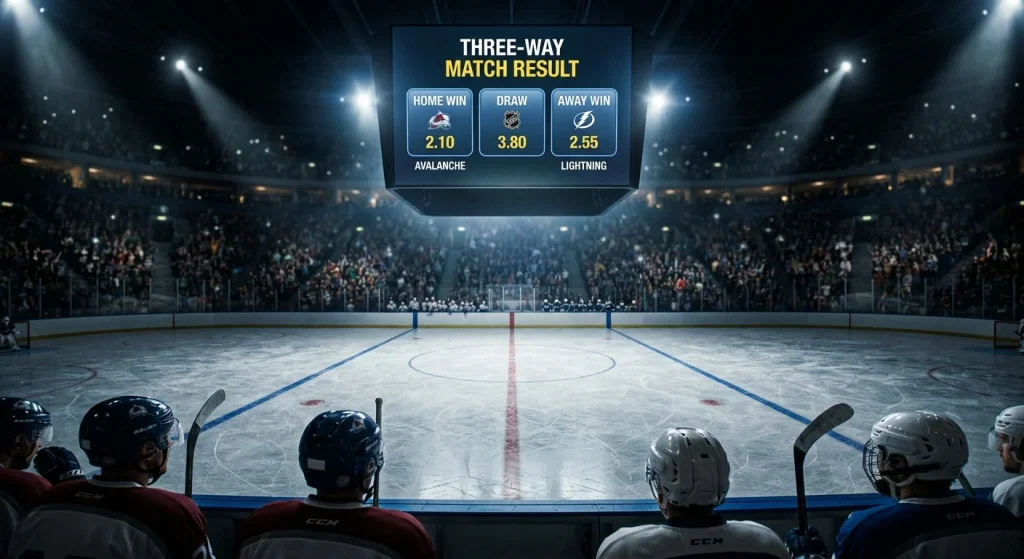
The first time a bettor encounters a 3-way hockey market having come from the standard NHL 2-way format, the reaction is usually confusion. Wait—there’s a draw option? I thought hockey always produces a winner. Yes and no. And understanding exactly what that yes and no means determines whether you approach this market correctly or expensively.
The 3-way market is one of the genuinely misunderstood products in UK ice hockey betting. It’s more common in European league coverage than in NHL, but it appears across multiple hockey competitions and can trip up bettors who assume all hockey markets work the same way. Here’s a precise explanation of the mechanics and when—if ever—the draw is a viable selection.
Three-Way vs Two-Way: The Core Difference Explained
The 2-way hockey moneyline covers the full game including overtime and shootout. There are only two possible outcomes: Team A wins or Team B wins. Because hockey must produce a winner eventually—overtime and the shootout guarantee it—the 2-way market has no draw option.

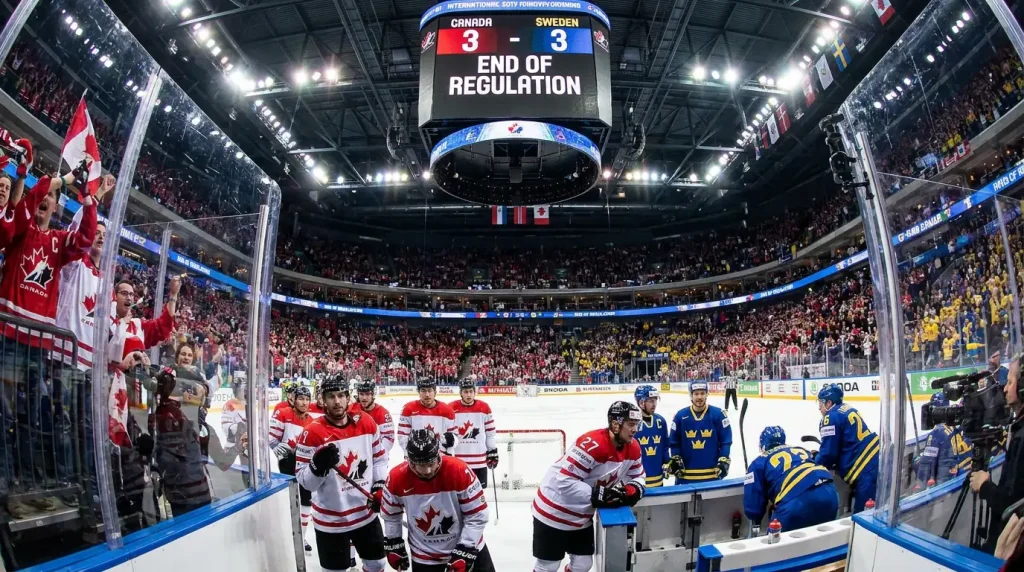
The 3-way market settles on regulation time only: the 60 minutes of standard play, not including overtime or shootout. In this structure, three outcomes are possible: Home team leads after 60 minutes (home win), Away team leads after 60 minutes (away win), or the score is level after 60 minutes (draw). If a game finishes 2-2 after regulation and then goes to a 3-2 overtime result, a 3-way home win bet wins if it backed the home team, a 3-way away win loses if it backed the away team, and the draw wins if it backed the draw—all regardless of what happened in overtime.

This is the critical point that trips bettors up: the 3-way result has no bearing on who actually won the game. It’s a bet on the regulation-time snapshot only.
In NHL betting at UK bookmakers, the standard market is 2-way—the full game result including any overtime or shootout. The 3-way market exists as an additional product at some platforms—listed alongside the standard moneyline as an alternative. For European league hockey (KHL, SHL, Liiga, lower-tier international competitions), the 3-way is often the default format, and the 2-way equivalent may be labelled as “including overtime” to distinguish it. Experienced betting analysis confirms that platforms like Bwin, 888sport, Unibet, and similar operators may be your best choice for 2-way market access on European leagues—so when the 3-way format appears as default, it’s worth checking if a 2-way alternative exists on the same platform.
When the Three-Way Market Matters
The 3-way market becomes practically relevant in two situations. First, when you’re betting on a league where it’s the default format (European leagues) and you need to understand what you’re backing. Second, when you’re specifically trying to bet on a regulation-time outcome and the draw is part of your analytical reasoning.
The second scenario sounds unusual, but it’s genuinely applicable in certain circumstances. Some NHL games—and many European league fixtures—feature stylistic matchups where both teams have strong defensive systems and limited offensive production. The historical rate of 60-minute draws in these specific matchups can be meaningfully higher than the 15% to 20% regulation draw rate across the league as a whole. A bettor who knows that two particular teams have drawn in regulation in four of their last six meetings has information that the market may not be fully pricing.
For international hockey, regulation draws occur with predictable frequency in games between top nations. When Canada meets Finland in the group stage of a major tournament, the draw at regulation time comes in around 20% to 25% of historical matchups. At odds of 3.50 to 4.00, which the draw typically commands, that’s close to or above fair value—assuming the line is set from a large enough historical base.
The Draw Value in Hockey Betting
Is the draw ever genuinely worth backing in a 3-way hockey market? The honest answer is: sometimes, in specific circumstances, with proper analytical support.
The general case against the draw is straightforward. Hockey is a sport that trends toward decisive outcomes in regulation—on average, roughly 75% to 80% of NHL games produce a regulation winner (no overtime required). The remaining 20% to 25% that go to overtime or shootout are exactly the games where the 3-way draw applies. At 3.50 to 4.50 odds for the draw, the implied probability is 22% to 29%. That range overlaps with the actual frequency enough to warrant careful analysis rather than dismissal, but the margin for error is thin.


The more interesting case for the draw emerges in specific structural scenarios: two evenly matched defensive teams playing in a tight standings context where a regulation draw (which in the NHL earns both teams an overtime point) might be an acceptable outcome for one side. Back-to-back scheduling situations where both teams are fatigued and both likely using backup goaltenders creates a different scoring environment than one would typically expect. These situational factors genuinely affect the probability distribution in ways that can make the draw worth including in a model.
The practical recommendation: don’t back the draw as a reflexive “value play” without specific analytical support. But don’t dismiss it categorically either. In specific circumstances it belongs in the toolkit. For the broader framework of 2-way moneyline betting that forms the foundation before adding 3-way complexity, our guide on moneyline ice hockey betting UK covers the standard market structure in detail.
What happens to a 3-way bet if an NHL game goes to overtime?
A 3-way NHL bet settles on the regulation time result only. If the game is level after 60 minutes and then goes to overtime, the 3-way draw bet wins. The outcome of the overtime period or shootout is irrelevant to the 3-way market settlement. The team that wins the game in overtime is the result on the standard 2-way moneyline, not the 3-way regulation-time market.
Which leagues use 3-way markets more—NHL or EIHL?
European leagues including the KHL and Scandinavian competitions use the 3-way format more prevalently than the NHL. For the NHL and EIHL at UK bookmakers, the 2-way (full game including overtime) market is typically the default, with 3-way available as an additional market type. For KHL and Scandinavian hockey, the 3-way regulation-time format is the more common default at many UK bookmakers.
Is the draw option worth betting on in international hockey?
In specific circumstances, yes. International hockey between evenly matched nations produces regulation draws at a rate of approximately 20% to 25%, and draw odds in the 3.50 to 4.50 range can be close to fair value for the right matchups. The analytical requirement is specific knowledge of the historical regulation draw rate between the competing nations and an assessment of whether the current squad compositions support a tight, low-scoring game. Without that specificity, the draw is not a recommended default bet.
Articles
Prepared by the Best Ice Hockey Betting Sites editorial staff.
