
Back-to-Back Games NHL Betting: How Fatigue Affects Moneyline and Totals Odds
 Available in US
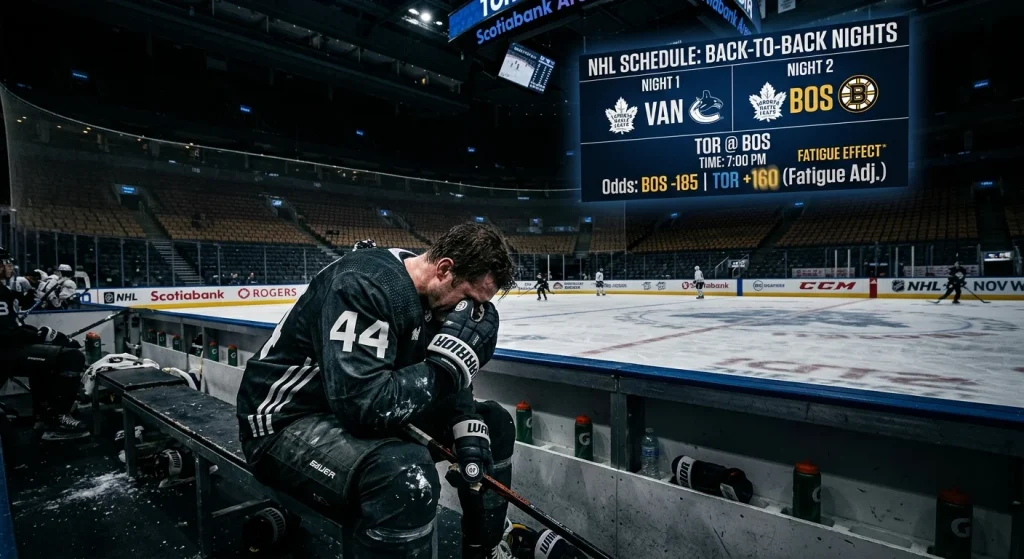
The NHL is a becoming something of a late-night betting favourite for UK punters—most East Coast games begin around midnight or 01:00 GMT, providing a continuous stream of live sport long after European events have concluded. That unique scheduling context creates something else too: an enormous amount of back-to-back scheduling throughout the season that most casual bettors ignore, but that represents one of the more reliable structural edges available in NHL betting.
Back-to-back scheduling—two games on consecutive calendar days—occurs because the NHL packs 82 games per team into a six-month season. Every team plays back-to-back sets multiple times, and the fatigue effect from playing two games in 24 hours is measurable and predictable. The betting market accounts for it to a degree, but rarely fully—which is where the edge lives.
How Back-to-Back Scheduling Affects Odds
When a team plays the second game of a back-to-back, several things happen simultaneously. Their starting goaltender is likely resting, which means a backup steps in. Their skaters are carrying residual fatigue from the previous night’s 60-plus minutes of high-intensity play. Their coaching staff may rotate forward lines to manage workload. And depending on travel, they may have crossed time zones and slept in a different city the night before.

Each of these factors individually shifts probability. Combined, they shift it substantially. Research on NHL scheduling effects consistently shows that teams on the second night of a back-to-back perform meaningfully below their season-average metrics—goals scored, goals allowed, and win rate all decline in measurable ways.
The bookmaker’s line for a back-to-back game does account for some of this. A team that’s a 1.70 favourite at home against a well-rested opponent might be priced at 1.90 or 2.00 when they’re the ones on the back-to-back. The adjustment is usually in the right direction. The question is whether it’s complete—and in my experience, it typically underestimates the fatigue effect, particularly for road back-to-backs where travel compounds the physical toll.
Totals and Fatigue: The Case for the Over
Fatigue affects defence and goaltending more reliably than it affects the raw desire to score. A tired skater can still generate offensive opportunities—the drive and motivation remain—but tired goaltenders and tired defensive zone coverage collapse more easily. The NHL produces around 6 goals per game as a long-run average across a full season. On back-to-back nights, that average ticks higher.
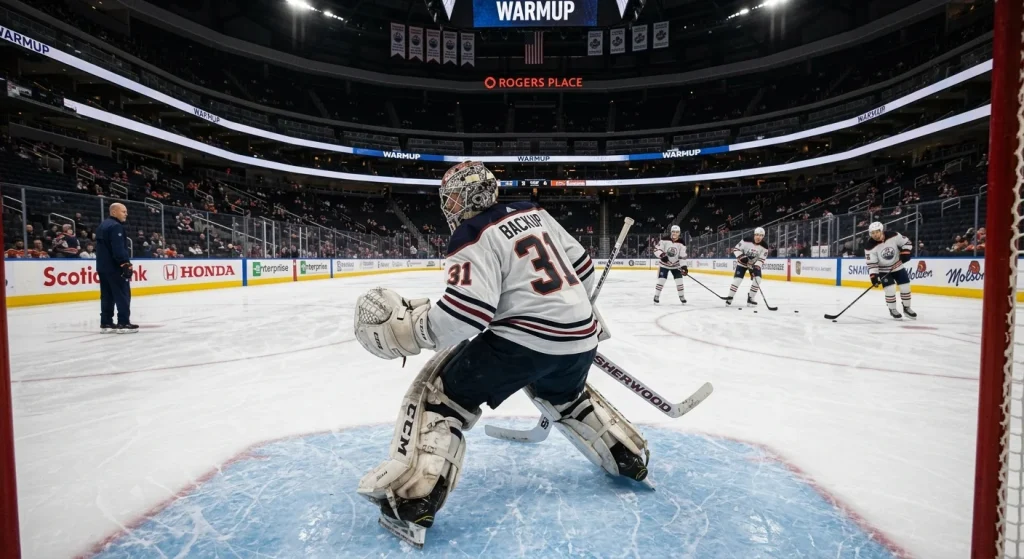
The mechanism is specific. A tired backup goaltender entering for the fatigued starter (who played last night) faces a back-to-back situation where their team’s defensive structure is also degraded. The combination of below-average goaltending and below-average defensive coverage creates a structurally higher-scoring environment. If the opposing team is well-rested, their offensive efficiency compounds the effect further.
For totals betting specifically: when one team is on a back-to-back with a confirmed backup in net, and the opponent is coming off a full rest, backing the over on that game’s total is one of the more analytically supportable recurring bets in the NHL calendar. It doesn’t win every time—hockey variance is high—but it has positive expected value often enough to track systematically.
The NHL’s extraordinary 2024/25 season attendance of over 23 million fans reflects a sport that packs games in everywhere, and the back-to-back scheduling that creates those attendance opportunities is the same mechanism that generates these betting edges.
Moneyline Strategy for Back-to-Back Games
On the moneyline, the back-to-back angle is most valuable in situations where the fatigued team is still priced as a favourite. A home team at 1.75 who played last night, confirmed with a backup goaltender, against a rested road team is a different proposition to what the odds suggest. The bookmaker’s “home advantage” adjustment and the team’s general quality have set a price that doesn’t fully reflect the specific degradation in performance probability for that night.

Conversely, when a team on a back-to-back is already priced as a significant underdog—say, a 2.50 road team on consecutive nights—the back-to-back factor is often already overpriced into the line. The market knows about the fatigue; the question is degree. At that price level, the back-to-back hasn’t created an exploitable gap; it’s just confirmed an obvious disadvantage.
The moneyline back-to-back edge is sharpest when the fatigued team is in the 1.60 to 1.90 range as favourites. That’s where the market’s under-adjustment is most commonly observable, in my experience. The implied probability says “this team is likely to win” but the contextual reality of last night’s game, the backup goaltender, and the travel schedule all point toward a much more uncertain outcome.
How to Spot Back-to-Back Schedules Systematically
The NHL schedule is published at the start of the season and is fully public. Building a simple tracker that flags back-to-back situations for each team—particularly road back-to-backs, which are the highest-fatigue scenarios—takes a few hours of setup and pays dividends all season.
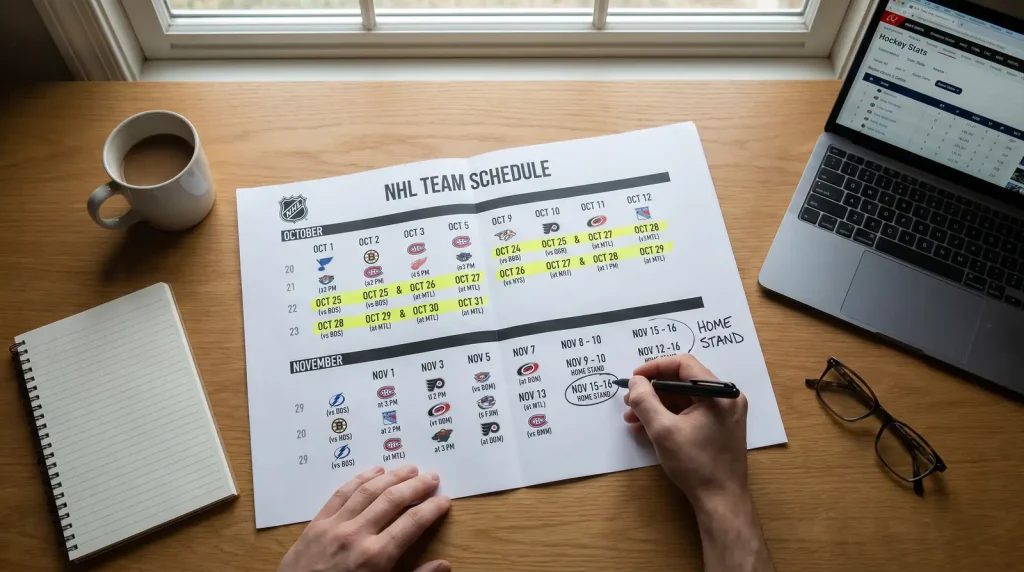
For any given game night, the relevant check is: which of the teams playing tonight also played last night? Official team websites, the NHL.com schedule, and various stats platforms all carry this information clearly. The goaltender confirmation—which comes closer to game time—tells you whether the starter is resting (expected) or surprisingly playing through (a different analytical situation).
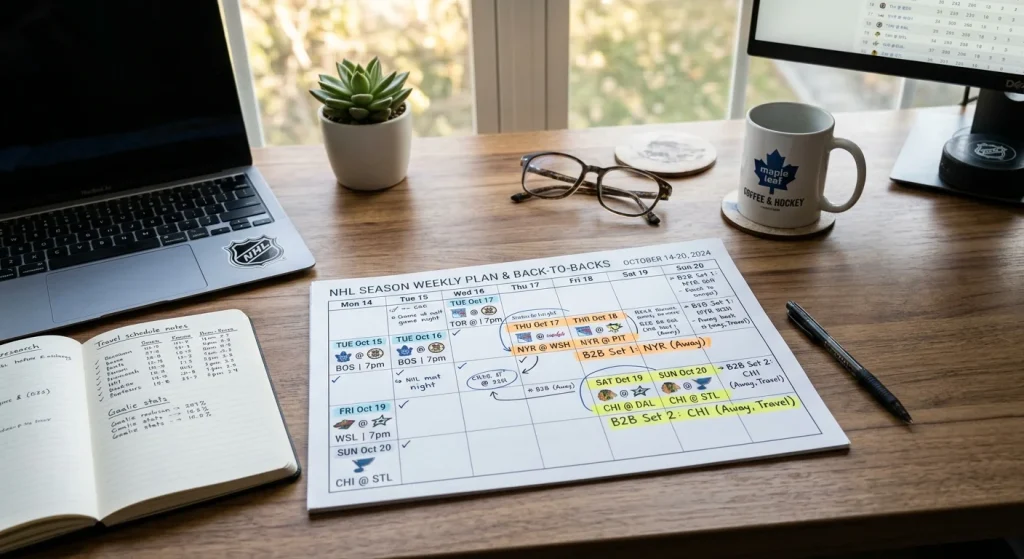
If you’re building a daily research routine for NHL betting, checking the back-to-back calendar takes about five minutes and consistently surfaces the highest-priority situations to investigate further. It’s one of the highest-ROI research habits available for the effort involved. For the broader strategic framework that context like back-to-back analysis feeds into, our guide on puck line betting UK covers how fatigue and scheduling affect the handicap market specifically.
Do UK bookmakers adjust NHL totals for back-to-back games?
Yes, bookmakers do adjust totals lines when one or both teams are on a back-to-back—but the adjustment is typically partial rather than complete. The market accounts for some of the fatigue effect, particularly when the backup goaltender situation is confirmed well in advance. Where the edge exists is in situations where the full compound effect of road travel, goaltender change, and skater fatigue isn"t fully priced in, particularly for games involving a tired home favourite on a back-to-back.
Is the road team more affected by back-to-back scheduling than the home side?
Generally yes. A road back-to-back compounds physical fatigue with travel: the team played away last night, potentially crossed time zones, and is playing away again tonight. This is the most fatigue-intensive scheduling scenario in the NHL. Home back-to-backs, while still producing measurable performance decline, allow the team to sleep in familiar surroundings and avoid the additional stress of travel. For betting purposes, road back-to-backs carry a stronger expected fatigue effect than equivalent home situations.
Where can I check which NHL teams are playing on back-to-back nights?
The full NHL schedule, published at the start of the season, is available on NHL.com and various sports data platforms. For any given game night, checking which teams also played the previous day takes under a minute with a searchable schedule interface. Official team websites and beat reporter coverage will also flag back-to-back situations prominently when they"re approaching, as these are standard editorial topics that get coverage in advance of the games.
Articles
Prepared by the Best Ice Hockey Betting Sites editorial staff.
